Butterflies in the Background
The Intelligence We Call Intuition


Butterflies in the Background:
The Intelligence We Call Intuition
I went for a walk during my lunch break last week and returned with a thought that I am finally ready to write about.
There’s a difference between believing you’re simply using your intuition, or helping because you care—and recognizing that you are using your intelligence to lead with presence and power.
For a long time, I thought of much of what I did as helping. I noticed what was missing, sensed what people needed, understood where something was moving before it fully arrived, and worked behind the scenes to create the conditions that would allow it to succeed. I thought of this as care. And it was care—but it was not only care.
It was perception. It was strategy. It was intelligence. It was leadership.
Women have been taught to separate these things from power because the forms of power most visible to us have often belonged to men. We’ve watched confidence become confused with competence, dominance mistaken for leadership, and volume treated as proof. Meanwhile, we’ve been urged to soften our voices and offer our ideas carefully, to ensure that no one feels diminished by the fact that we may know something they don’t.
We are expected to be capable but not intimidating, intelligent but not proud, ambitious but not threatening, direct but never sharp, confident but never too certain. We are told to know our worth, but we are punished when we name it aloud.
The training begins long before many of us understand that it’s happening. We learn to read the room before we speak. We study expressions and listen for changes in tone. We assess whether an idea can be offered directly or whether it must be eased into a conversation and allowed to appear as though everyone arrived at it together.
We learn that being right is not always enough. We must also understand when to speak, how much to say, whose resistance must be anticipated, whose ego must be protected, and how an idea must be shaped before the people with authority will allow themselves to receive it.
None of this comes from a lack of confidence.
It’s intelligence developed under pressure.
Women are often required to approach knowledge itself this way. We read around and through texts written by men—or texts published, authorized, canonized, and circulated beneath men’s names. We move through the repeated he, the supposedly universal male subject, and we take what is useful and metabolize it through the female experience.
We ask what a theory means inside a body and a mind that has been watched, judged, interrupted, underestimated, dismissed, controlled, or endangered.
The truth itself is not different because a woman encounters it.
But our approach to reality is shaped by the conditions through which we have been permitted to meet it.
Women do not move through the world exactly as men do because the world does not respond to us in exactly the same way. We have learned that identical actions can produce different consequences depending upon who performs them.
A man may be decisive. A woman is difficult. A man may be exacting. A woman is demanding. A man may know what he wants. A woman is controlling. A man may speak with authority. A woman is aggressive. A man may protect his time. A woman is selfish. A man may refuse poor treatment. A woman is emotional.
The lesson is repeated until many women learn to float around an idea rather than move directly toward it. Sometimes we do this so instinctively that we don’t realize it’s a strategy. We feel it first as flutter—the butterflies in the background, the sensing before the saying.

We call it intuition, as though it arrived from nowhere. It didn’t. It’s pattern recognition earned across years of reading rooms that were not built for us.
Being direct can be dangerous for women. That danger exists on a spectrum, but it’s real—social standing, professional advancement, a job, a relationship, physical safety.
We’re not merely asking, Is this true?
We’re asking, Can I say it? How will it be heard? What will it cost me? Will the idea survive if I deliver it too directly? Will I survive it?
This is part of the invisible cage in which women have lived. Many of us are positively done with it. We reject it, write about it, name it, claim our agency against it. And yet even as we reject the cage—even as I write this now—we continue making bargains with it. We keep one foot inside the door because access still matters.
We take jobs that reduce us to assistants when we are capable of leadership. We perform the emotional, relational, and intellectual labor that holds organizations together while others occupy the roles that name authority.
Eventually, the story grows so familiar that we mistake it for identity. We think we are simply helpful, naturally better at supporting than leading. We think someone else must know more because he speaks with greater certainty. We don’t always recognize that the organization, family, project, or relationship may already be moving through our intelligence.
Acknowledging this isn’t arrogance. It’s accuracy.
Humility should not require self-erasure. Nor should claiming our power require us to be forced out of the spotlight. I don’t want to imitate the people who have used their power badly. I don’t want the kind of power that must dominate to prove that it exists. I don’t believe women must become harder, colder, louder, or crueler to lead.
I believe there is another form of power—one many women have already been practicing without naming it. It is perceptive rather than performative. It understands that timing matters. It listens before it moves. It sees relationships as part of the structure through which progress becomes possible. It recognizes that influence isn’t always created by force and that the person who appears to control the room may not be the person shaping what happens within it.
Power without wisdom becomes domination. Power without self-control becomes destruction. Power without timing exhausts itself against closed doors. But power joined with wisdom understands conditions. It knows when to speak plainly, when to wait, when to push, when to stop, and when to allow an idea to take root before demanding more.
This approach may appear indirect to those who’ve been permitted to move directly—soft to those who recognize power only when it arrives armed. It may look like a butterfly floating around an idea, touching down lightly and lifting away again.
But the butterfly is not lost. What appears to be circling is study. What appears to be hesitation is timing. What appears to be softness is a strength that doesn’t need to injure what it hopes to transform.
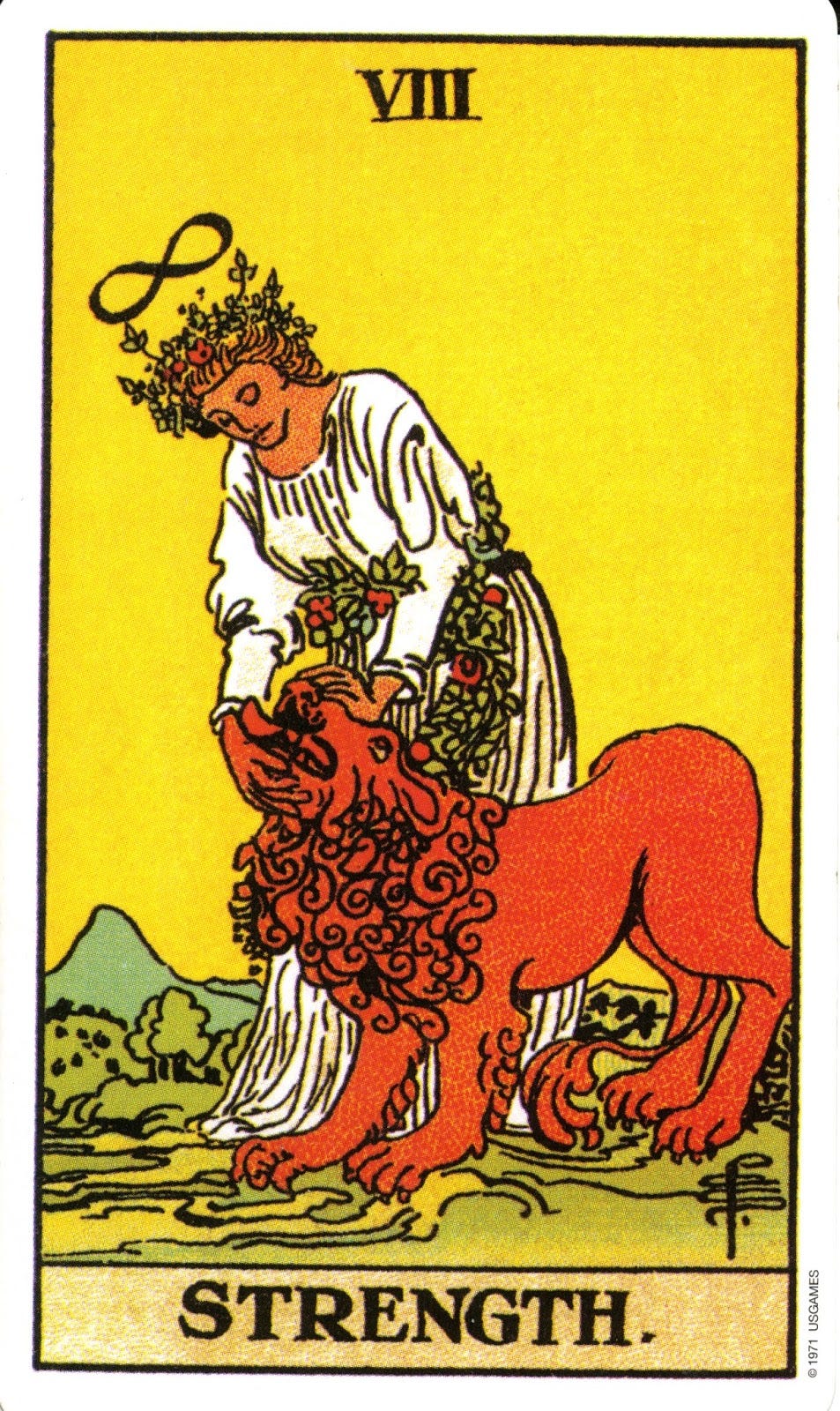
If the idea is a lion, she is not trying to capture it at all. A lion cannot be netted into cooperation—it can only be met. She is learning its temperament, creating the conditions in which it will come forward unharmed, whole, and willing.
This is relational intelligence: not instinct alone, but a learned method—intuition matured into craft.
Men have often been taught to hunt with guns and enormous nets—to confront, overpower, capture, and claim, as though the shortest distance between two points were always the wisest path. Women have had to learn another way. We read the field. We move slowly enough to understand what force would destroy.
This can turn unhealthy when rooted entirely in fear. We shouldn’t have to make ourselves smaller to make an idea acceptable. The approach needs shaping, precision, discernment.
So do I.
I will keep learning when indirection serves the work and when it merely protects me from the discomfort of claiming what I know—when patience is wisdom and when it has become permission for others to overlook me.
But I no longer believe the approach itself is wrong.
I dare to call it a feminine approach—not because all women lead one way or because men are incapable of relational wisdom, but because these capacities have been cultivated through the realities women have inhabited. They grew from the need to perceive danger, preserve connection, carry knowledge across exclusion, and influence systems that did not openly grant us authority. We’ve been taught that serious thought must detach itself from gender to be universal. Yet what has been called universal has often been male experience. Naming a feminine approach doesn’t reduce its intellectual value. It exposes the conditions through which that intelligence was formed.
The world may not know that it’s ready for this kind of leadership.
It continues to reward certainty over curiosity, control over relationship, conquest over care. But that doesn’t mean women have been absent from leadership. We’ve been reading, translating, anticipating, repairing, and altering the course of things all along. Our intuition was never merely emotion. Our care was never merely service. Sometimes we were simply waiting for the moment when an idea could live.
There’s no shame in standing in our power. There’s no shame in saying that we know what we know, or in wanting authority equal to the responsibility we already carry—or in breaking rules that were written to preserve our diminishment.
We must use truth and wisdom as crystal—something that purifies thought and brings clarity to the mind’s eye. Truth reveals the cage. Wisdom teaches us how to leave it without building another in its place.
We are stronger than we knew. More capable than we were told. More aware than we have permitted ourselves to say. Much of what we have called intuition is intelligence waiting to be claimed. Much of what we have called helping is leadership that has not yet named itself.
Anything can be influenced given the right conditions. Find those conditions. Understand them. Create them. Know when to float and when to land. Know when to wait and when to speak so directly that the old story can no longer contain the truth.
The world may believe it has always been led by lions—but perhaps it has been led by the butterflies in the background all along.