
The Dreamer’s Debt
On Being Called to the Work of Doing

The Dreamer’s Debt: On Being Called to the Work of Doing
Does equality exist beyond the mind of the dreamer?
Ask the river—it doesn’t distribute itself evenly. Ask the mountain—it doesn’t apologize for its shadow. The bird doesn’t weigh fairness when it takes the worm. The wind doesn’t grieve what it levels and what it leaves standing. Nature, by all appearances, does not operate by the moral logic we spend our lives trying to construct—and it can feel, in certain moments of honest reflection, as though justice is an entirely human invention—a thread we weave into the fabric of the world because we cannot bear to live without it.
But what happens if we stay with the river a little longer?
Watch what happens after a drought, when dry river beds crack and the landscape appears to have given up entirely on receiving any water at all—and then the rain comes. The river doesn’t always try to return to its old channel. It finds a new one. It carves a different path through the changed earth and moves on, as if the interruption was simply part of the logic of the whole.
Watch the ecosystem after a fire, which doesn’t pause to mourn what burned but immediately begins the slow, purposeful work of regeneration. Plants protected as seeds beneath the soil break open the scorched earth, insects return, birds follow, and the system reorganizes itself around the conditions.
Mountains that cast their shadow do so while the sun falls on the other side; and in time, as the earth turns, all sides will see the light. As birds are fed, more worms are born. The system loses nothing it doesn’t eventually, in some form, reclaim.
There is, it seems, a tendency written into living systems—not a guarantee or a straight line—but a directionality toward persistence. There’s a pull toward what ecologists call dynamic equilibrium, the capacity of complex systems to lose balance and then find it again by reorganizing around what is. Scientists James Lovelock and Lynn Margulis described some of this in the Gaia hypothesis—the observation that Earth itself behaves, in measurable ways, like a self-regulating system that over time, tends toward the conditions that allow life to continue.
David Suzuki talks with James Lovelock about the origins of his "Gaia" hypothesis, which suggests that the Earth is one organism. From the documentary series "The Sacred Balance", produced by Kensington Communications (www.kensingtontv.com.)
The planet does not pursue fairness, but it does pursue coherence. It pursues the ongoing possibility of its own survival and emergence.
Are we so different from the earth and its natural pursuits?
We are not separate from nature’s pull toward coherence. We are the part of it that became conscious. That consciousness is not a gift without obligation. It means we must choose to move in alignment with the arc that the rest of the living world follows by necessity and build the conditions that allow that alignment to hold—or we become, by our own design, the source of the discord we were capable of preventing.
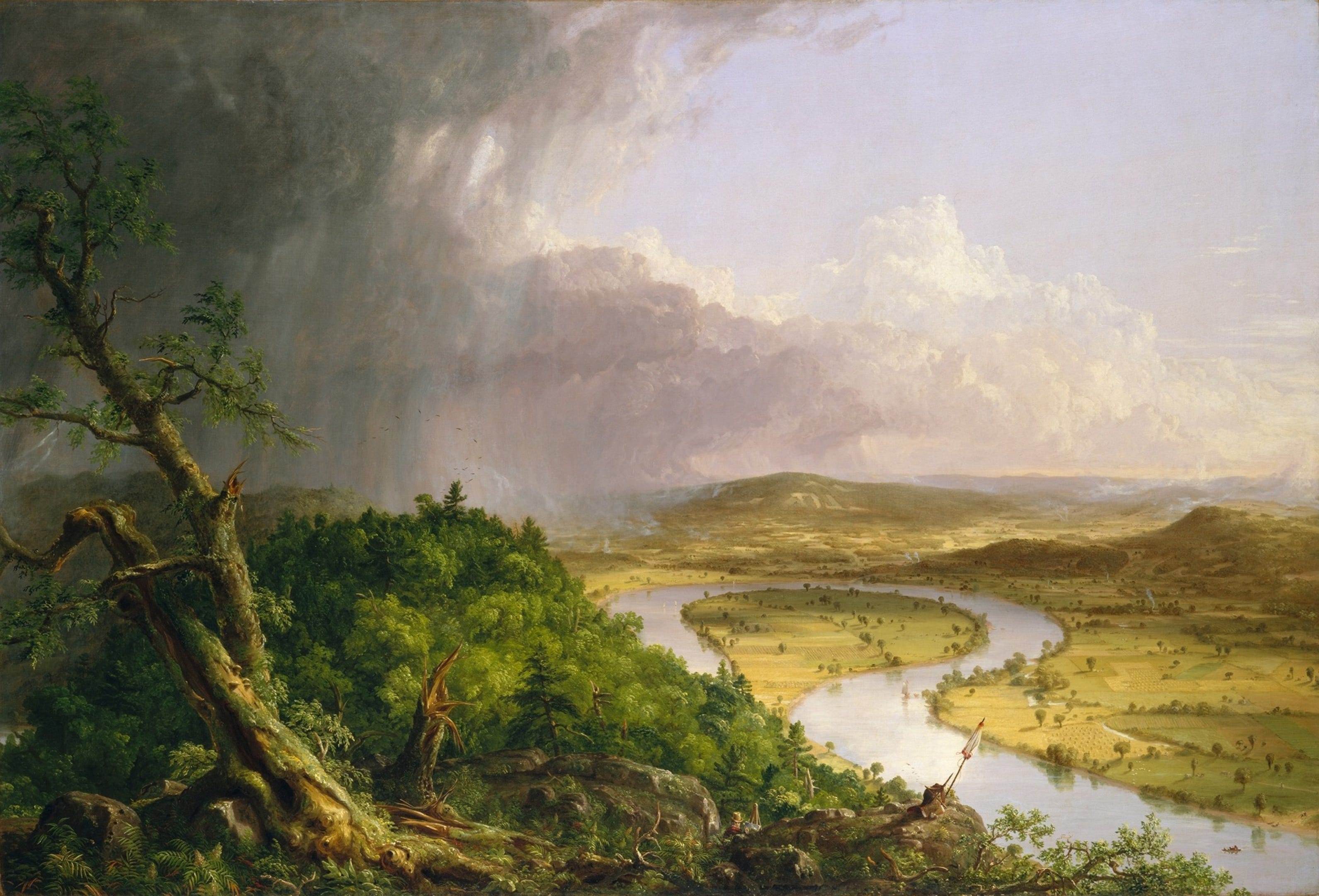
We are not apart from nature. We are nature. We are thinking, feeling, building, grieving nature, capable of language and abstraction and moral imagination, but made of the same matter. We are governed by the same deep impulse toward continuation that moves through every living thing.
Baruch Spinoza named this impulse conatus—the intrinsic striving of every being to persist in its own existence, not as an external command but as an interior orientation, as fundamental to what a thing is as the shape it takes. A seed does not decide to grow toward light. It grows because growing toward light is what it is. And we, Spinoza argued, are no different in our essential nature, only in the complexity of the forms our striving takes.
The Stoics went further, and it’s their formulation I find most beautiful. They described logos—a rational, ordering principle woven through all things, not imposed upon the world from outside but alive within it, the intelligence by which the whole tends toward coherence. To live according to nature, was not to become passive or wild but to bring oneself into alignment with this deeper order.
The Stoics recognized that the same intelligence organizing the cosmos was also available to the human mind and conscience, if one was willing to listen for it. Marcus Aurelius, writing in private in the second century, returned to this repeatedly,
“You have power over your mind, not outside events. Realize this, and you will find strength.”
He was not encouraging withdrawal from the world. He was describing the practice of staying in contact with the ordering current that runs beneath the noise and then acting from it.
✨
What I am reaching toward, is that the impulse for balance, repair, and the conditions that allow flourishing is not merely a moral invention of false hope or a construct of the human mind.
It’s a truth of existence—a pattern we share with the living world.
Before we can design systems worthy of the people inside them, we might start by watching how the living world does it. Robin Wall Kimmerer shows us the way.
Robin Wall Kimmerer, botanist and member of the Citizen Potawatomi Nation, writes in Braiding Sweetgrass about the grammar of animacy, about the intelligence of reciprocity that runs through the plant world and the traditions that learned to read it—the understanding that healthy systems are built on mutual care, on taking only what is needed, on returning what sustains the whole. She’s not writing in metaphor. She’s describing an observed pattern in living systems, a pattern that human communities, at their best, have always mirrored. We didn’t invent the ethic of reciprocity. We recognized it, because it was already present in the world we came from.
So then, does equality exist beyond the mind of the dreamer? I think the more precise answer is that the impulse toward balance exists at every scale of the living world. It exists in the river finding its new path, in the ecosystem rebuilding after fire, in the body’s own relentless effort to return to homeostasis, in the nervous system’s search for safety and regulation when the conditions around it allow for return.
This impulse is real and not imagined. What is not guaranteed, what requires the gift and burden of human consciousness, is that we meet it with enough stillness and alignment to let it become righteous action, rather than simply reaction.
This is where the dreamer’s debt becomes specific and actionable. We are the part of nature that must choose to act on what the rest of nature does by necessity. The river doesn’t deliberate before finding its new channel. The forest doesn’t hold meetings before regrowth. Birds don’t devise structured plans before finding the worm. But we do.
We have the extraordinary and terrifying capacity to recognize the pull toward coherence and then refuse it. We can understand what repair requires and decide the cost is too high. We can realize that the conditions we’ve built are breaking people and conclude that they are too entrenched to redesign. We can override our instinct with ideology, hopelessness, fear, and with the accumulated inertia of systems that have decided their own continuation matters more than the flourishing of the people inside them.
And this, I have come to believe, is the real wound at the center of so much institutional and civic failure. It’s not that people are bad, but that the conditions we have built make truth, repair, and dissent too costly to sustain.
The dysfunction we tend to attribute to individuals is more accurately understood as structural. It’s baked into the language, the incentives, and the feedback loops that reward silence and punish those who name wrongdoing.
The arc does not bend on its own in human systems. It bends when someone designs conditions that allow it to bend—or it stays rigid and brittle because no one did.
What would it mean to build differently?
I think and write often about what it would mean to treat the relational field inside an organization, a community, and a democracy, with the same care we give to physical architecture—what it would mean to understand that the invisible conditions we create determine whether people can think clearly, tell the truth, and recover from rupture.
The Stoics called it living according to logos. Kimmerer calls it reciprocity. I am coming to call it a form of organizational design—the deliberate, patient work of building the conditions that allow organizations built from human systems to do what the living world does by nature.
Like nature, we lose balance and find it again by reorganizing around what is most true.
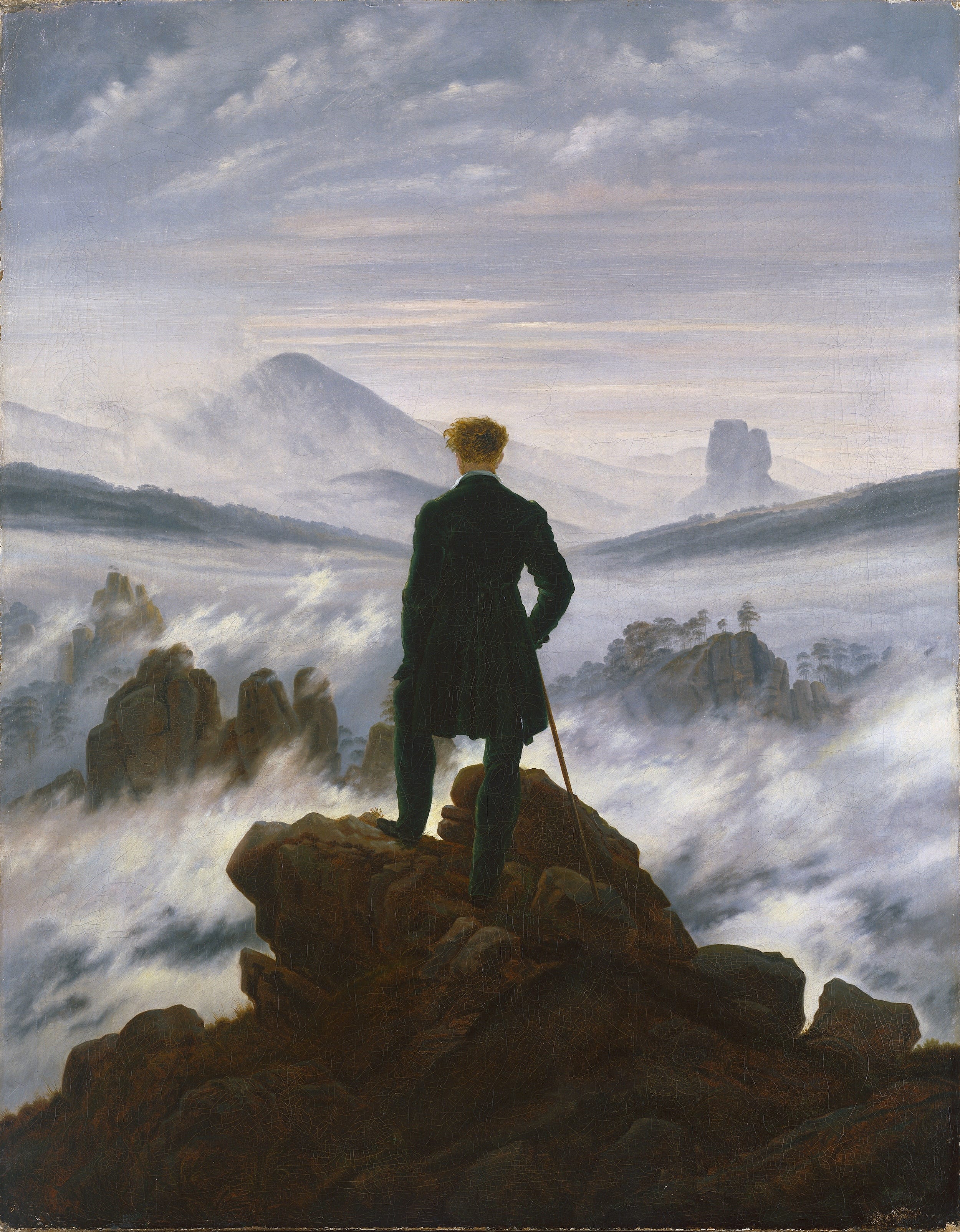
Democracy too, is a living system. Like all living systems, it tends toward coherence when the conditions support it, and toward collapse when they do not. Those who want power, intend cruelty, or wish for collapse are not waiting or hoping. They are busy in the architecture, laying stone by stone while those who care hold meetings to debate the blueprint of something better.
Cruelty is organized and forceful. It doesn’t suffer from the paralysis of care. It doesn’t wait to build the right plan, to ensure proper execution, or waste time wondering whether the arc will bend on its own. It uses what power it has, and it strikes.
For those of us who care about reason and humanity, we mustn’t suffer this paralysis either. The universe has not abandoned us to this labor—rather, we are the part of it that became conscious enough to recognize these patterns and choose to move with them. That recognition is not incidental; it is the calling itself.
To be the part of nature that can see the work
is to be the part of nature that must do it.
The call does not arrive from the heavens as a guarantee of outcome. It rises from each other, from those who are ground down by what we have collectively permitted, from every voice that named the wrong and was told to wait, to trust the process, to be patient, while the process was being dismantled from within.
We are not owed a just world. We are called to one—which is harder, and which is the point. Gratefully, we are not called to it against the grain of existence—we are called to it in alignment with it.
If we are willing to be still enough to listen and bold enough to act, we will come to see that we are aligned with the same deep current that moves the river toward its new channel and the forest toward its regeneration.
There is no magic waiting to do the work for us. Yet there is something better than magic—there exists the long, patient intelligence of living systems—and we are one of them.
That is enough to begin the work of doing.
Works Cited
Aurelius, Marcus. Meditations: A New Translation. Translated by Gregory Hays, foreword by Ryan Holiday, Modern Library, 2003.
Kimmerer, Robin Wall. Braiding Sweetgrass: Indigenous Wisdom, Scientific Knowledge, and the Teachings of Plants. Milkweed Editions, 2013.
Lovelock, James. Gaia: A New Look at Life on Earth. Oxford University Press, 1979.
Spinoza, Baruch. Ethics. Translated by Edwin Curley, Penguin Classics, 1996.


We are the magic ✨
This is a beautifully written essay Michelle. Thank you for sharing your wisdom with us. Happy Writing!🤠🤙
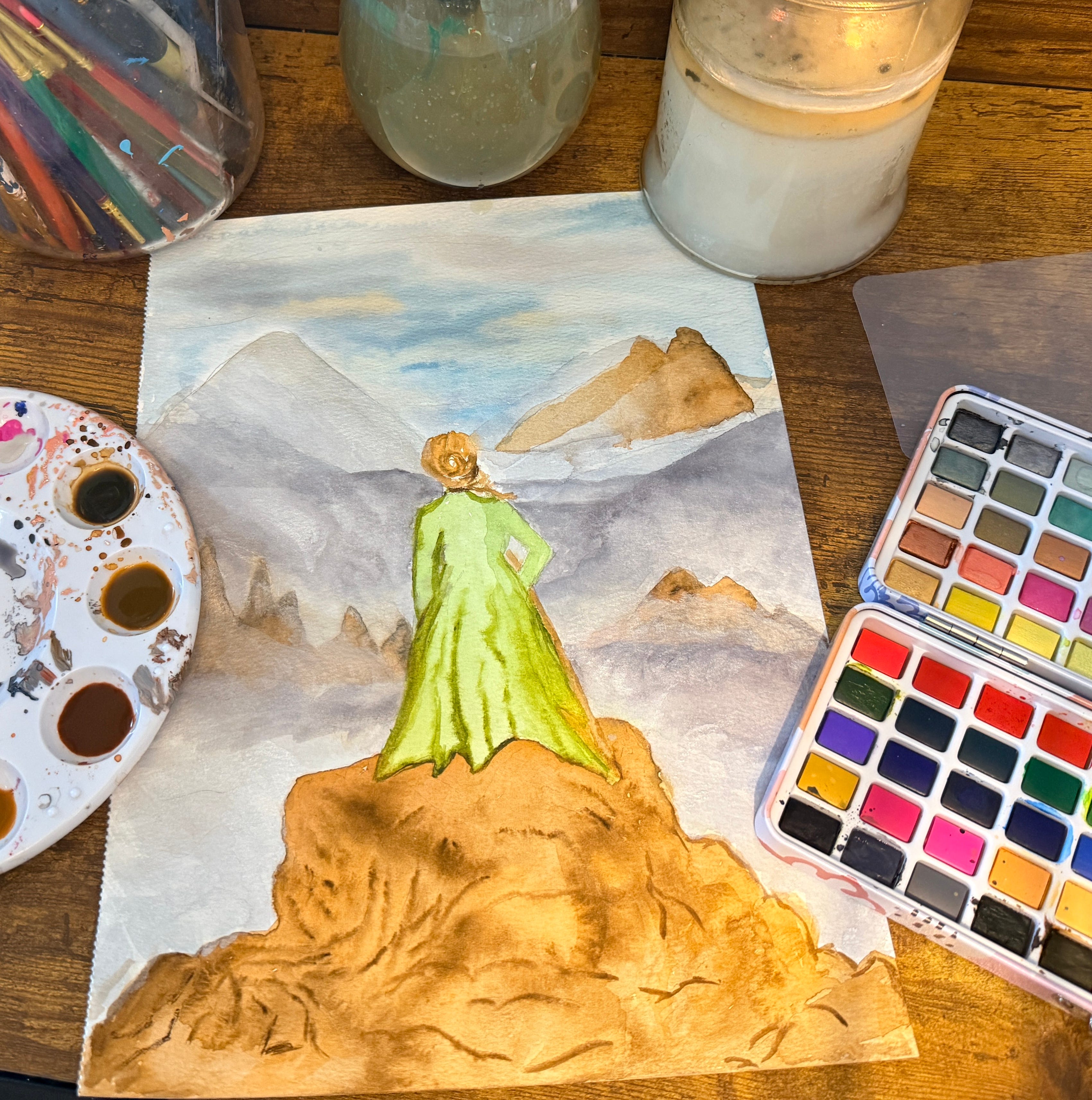
Excellent deep thinking essay, Michelle. And love this watercolor painting. It reminds me of something I saw earlier today, the Brocken spectre. An eerie natural optical effect that occurs when sunlight projects a person's shadow onto cloud or fog.