
Water Knows the Way
A Saturday at the Spa

Water Knows the Way: A Saturday at the Spa
There’s a kind of listening that only happens when you stop to let life hold you for a little while.
I went to King Spa with my daughter Gabby and her aunt Lia for that very reason—I needed some time to listen. On Saturday, as a joint celebration of Mother’s Day weekend and their birthdays—we enjoyed a long, languid day of moving from room to room as the body asked, with no plan, no agenda, and no place we had to be by any hour. There’s a logic to a Korean spa that the Western mind must soften into; you don’t approach a day like this with a plan but simply allow it to unfold, wandering and resting and sweating and drifting—following the heat, the cold, the light, or the silence until it gives you something. The water seems to know the way. It always does, every time I’ve visited this spa I’ve experienced this type of unfolding. By the end of the day, I had been given more than I came for.
For most of the day, I was on my own. I’d come needing a little space to think, and Gabby and Lia understood, sending off into their own rhythms while I glided into mine. We rejoined for lunch and again later in the pools. The long, contemplative middle of the day was mine alone—and I found, somewhat to my surprise, that being alone in a place like that doesn’t really feel like being alone at all. The people around me were warm and eager to connect, and I heard many languages spoken across the rooms throughout the day, none of which slowed the connection in any way. If anything, the variety seemed to make our minds even more curious to reach out to one another in that quiet, subconscious way that only the spirit really knows. We felt each other’s presence in those spaces and shook hands across time and space with a smile and knowing eyes, without language ever becoming a barrier between us.
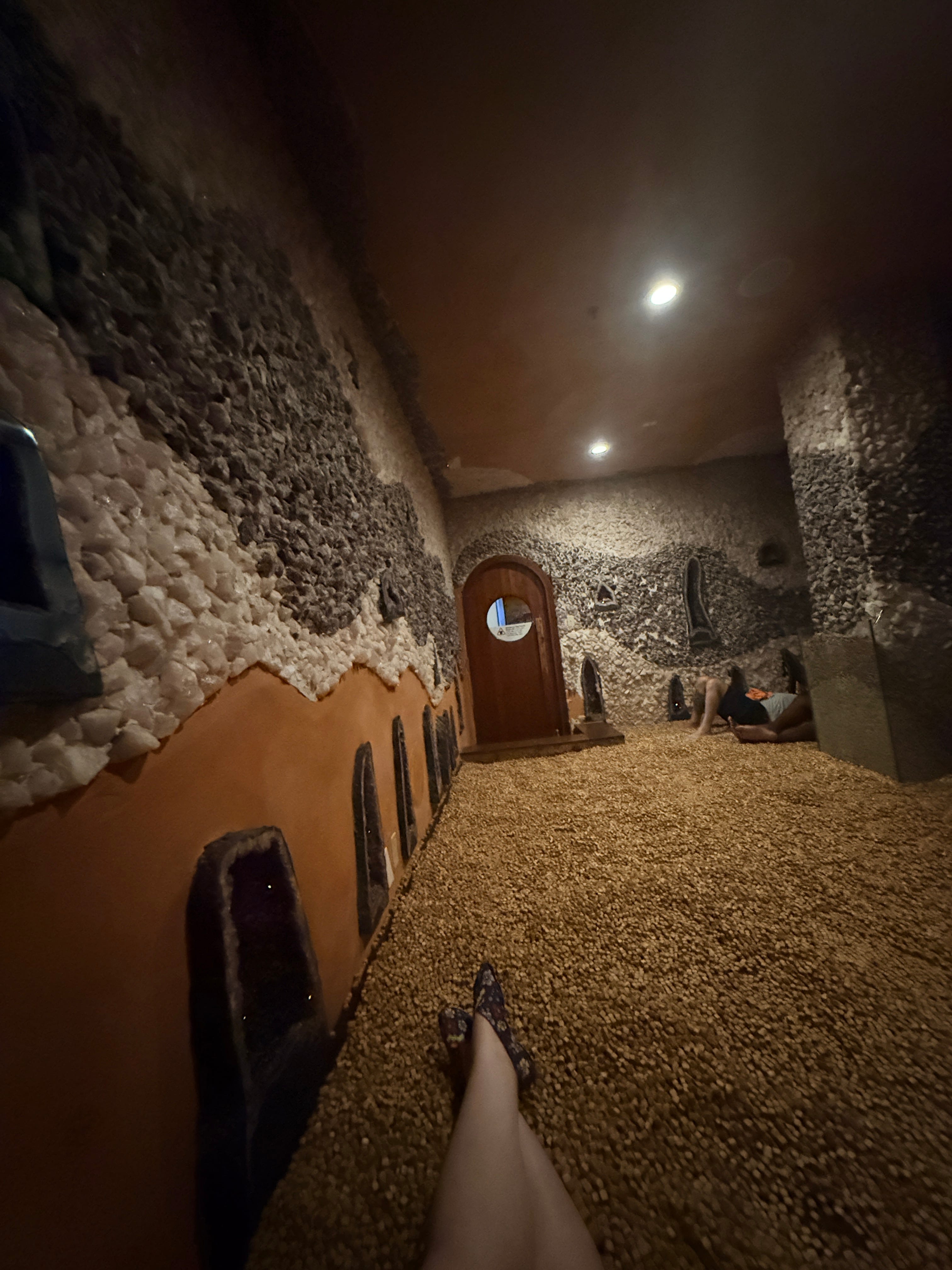
The first room that pulled me in was the cypress wood room. I ended up spending more time than I first intended to there. The room is beautiful and warm and feels like a forest that has decided to forgive you. Cypress is a wood of thresholds—the Egyptians built sarcophagi from it because it refused to rot, and it could carry the body across the boundary between worlds while keeping its grain intact. The Persians planted cypress in their gardens as the tree of eternity, the long-lived sentinel that endured every season and outlasted every gardener. And the Koreans, who have made an art of the bathhouse, revere cypress for the phytoncides it releases into the air—antimicrobial compounds the trees emit to protect themselves and—us. To breathe in a cypress room is to inhale the slow patient defense system of an entire forest, a wood that has been doing its work since long before any of us thought to call it medicinal.
I walked in and settled myself into the back left corner, where the warm pebbles cradled my body and the wood smell wrapped around me like a familiar blanket. I’d brought along Other Minds by Peter Godfrey-Smith, a book about octopuses and the deep evolutionary roots of consciousness—about how mind itself may have arisen more than once, in more than one body plan, on more than one branch of the tree of life. I read for a while, took notes in my notebook, then let the book rest beside me and just sat in the warmth. A few others were resting and breathing quietly around me, all of us in our own private worlds but somehow simultaneously connected in that very space Godfrey-Smith may have been talking about. There’s something deeply restorative about being in a room with strangers who are all, by mutual unspoken agreement, allowing themselves to be still, peaceful, and silent together.
After some time, a family came in. They settled near me and began burying each other’s legs and then their bodies in the cypress pebbles, whispering low and laughing softly, weaving in and out of one another’s bodies the way that families who haven’t been pulled apart still know how to do. It didn’t bother me at all; it was actually quite lovely to witness—that easy, unselfconscious connection, that affectionate play between adults. We exchanged a few smiles, a few moments of bright-eyed recognition—the gentle but joyful connection that passes between strangers in places like this, and eventually I offered to take their photo. They eagerly handed me their phone, and that small exchange opened into whispered conversation. One woman was from Dallas; the rest of the family was visiting her from Nigeria, and it was the first time any of them had ever been to the spa. We talked for a while, and they were so warm, so generous in their welcome, so glad to have each other and to be exactly where they were. I left the cypress room thinking about how rare and how holy it is to witness a family that simply knows how to be a family. Their love was contagious and filled my spirit.
Gabby, Lia, and I met up for lunch in the spacious spa restaurant, where I had a steaming plate of udon noodles with vegetables—the kind of clean, simple, broth-and-warmth meal that feels medicinal in its own way. For dessert we shared a small portion of rice balls filled with red bean paste and rolled in coconut, in dark green and yellow and red and purple. I tried them for the first time. They had a curious, mildly sweet, jelly-like texture I hadn’t expected. They were soft, yielding, and just unfamiliar enough to make me pay closer attention to what I was eating on the second try. There’s a particular pleasure in tasting something for the first time when you’re already halfway through a slow day, when your senses are open and your mind has stopped rushing—everything lands a little more vividly. After lunch, Gabby and Lia drifted back into their own afternoon, and I drifted back into mine.
From there the day took on a kind of dreamlike rhythm as I made my way through the pyramid room, the oxygen room, the infrared light room, and the salt room—each one its own small world of texture, color, smell, healing properties, and warmth. Each room both asked of and gave to the body in slightly different ways. I wouldn’t have been able to say, in any given moment, exactly what I was looking for, but the body knows at times in ways the mind cannot; the body moves toward the warmth it needs and away from the heat it has finished with—you only have to listen.
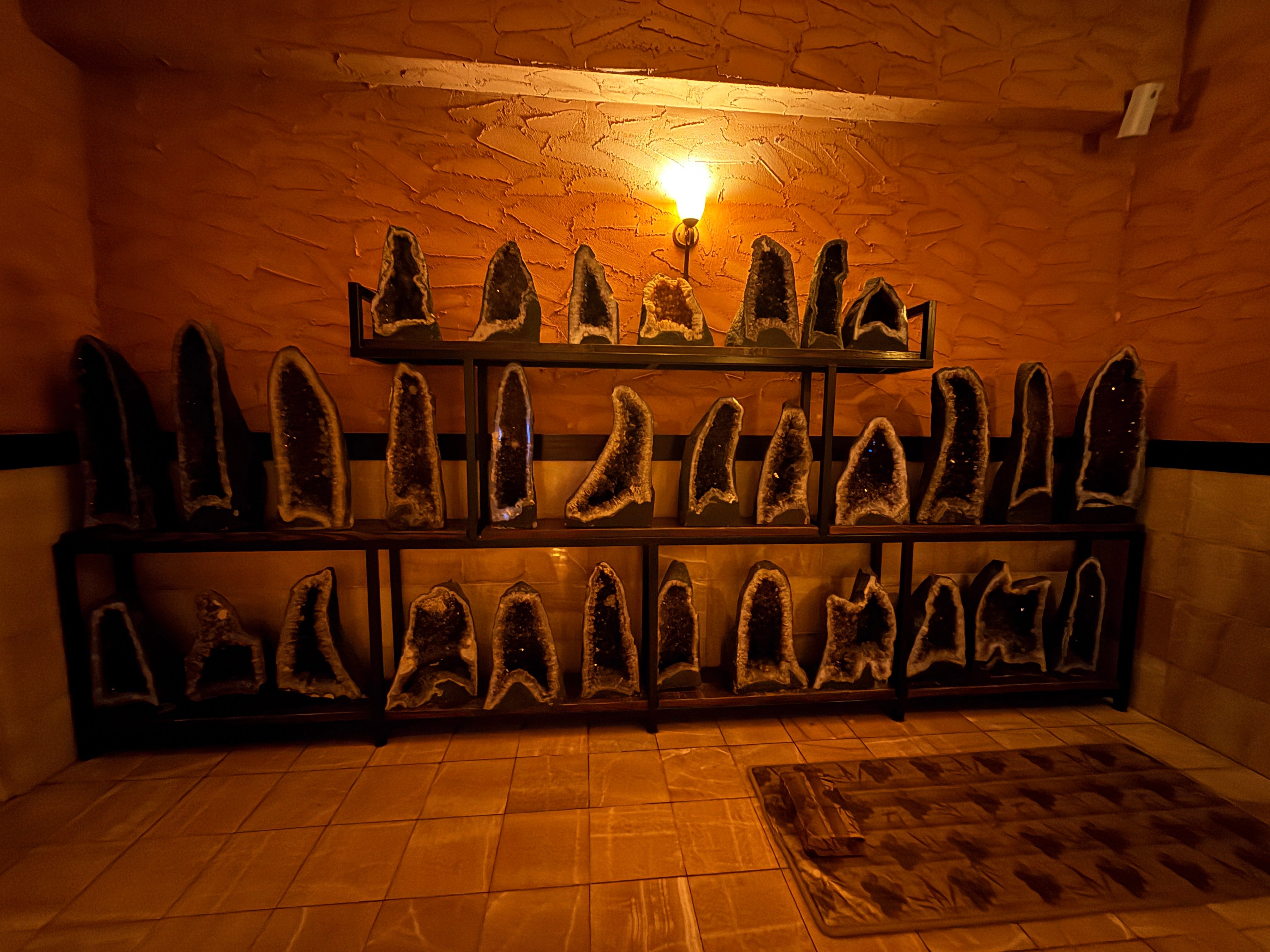
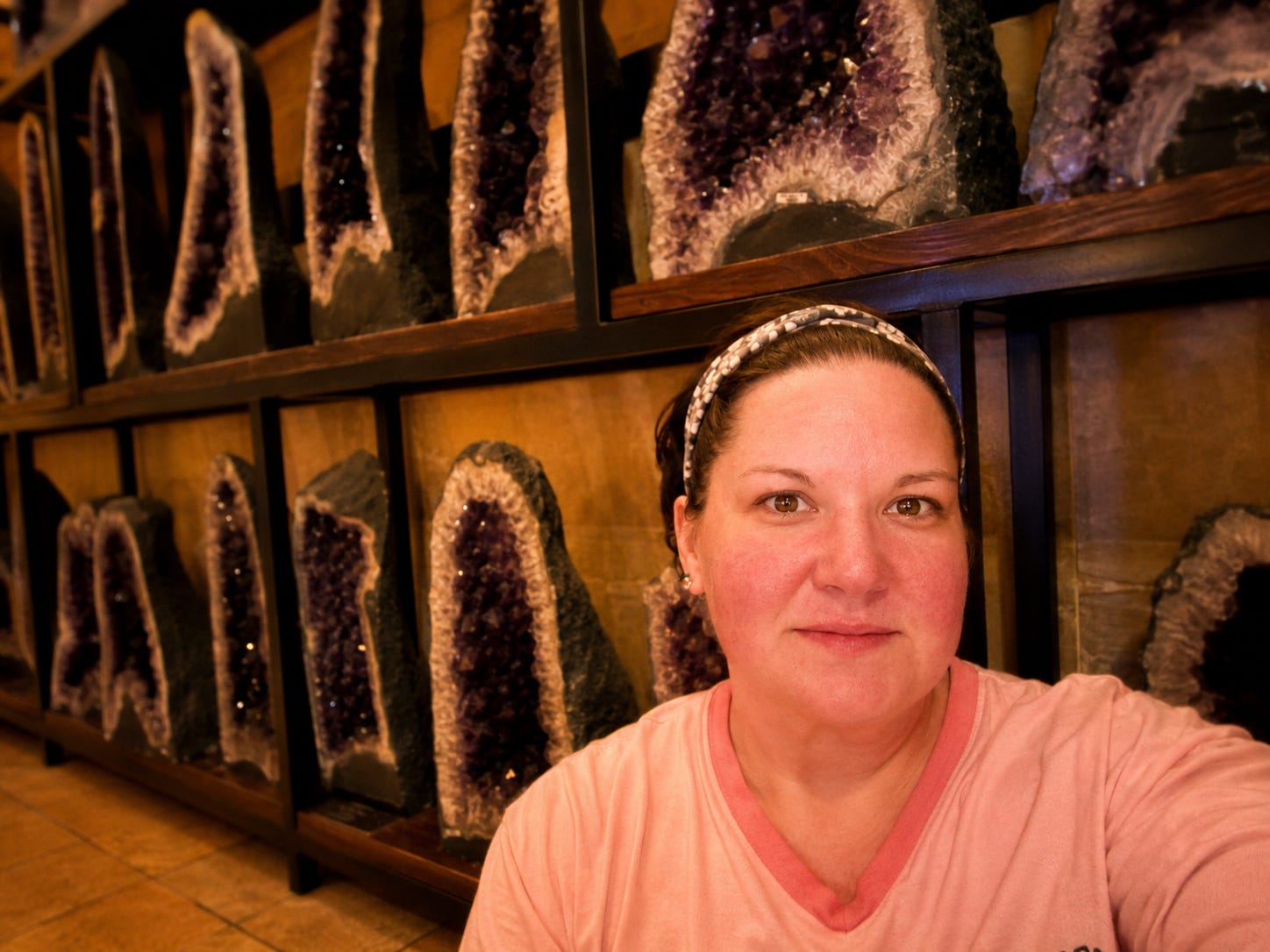
What I didn’t expect was the effects of the amethyst alcove that day. Tucked into the back of the spa, where the doorways to several rooms gathered around an open landing, there’s a side area where an entire wall is lined with giant amethyst crystals on tiered shelves. The amethysts are stunning—cathedral stones with violet interiors catching the low light like reverent glass. Mats are spread on the floor in front of them so that you can lay down and rest beneath the clarifying awe of all that violet stone. I first sat cross-legged and entered a meditative state for a time, losing track of what the time on the clock said. When I felt ready, I laid down and stayed for a while longer. I draped a small towel over my eyes and allowed myself to cry—one hand on a crystal and one hand over my heart.
Amethyst comes from the Greek amethystos, meaning not drunken; the ancients believed the stone protected against the kind of intoxication that takes a person from themselves. It’s a stone of sober clarity, of the dissolution of illusion, of the quiet between thoughts where intuition can finally be heard. Whether you take that literally or symbolically or somewhere in between, there’s no denying the effect of resting beneath a wall of those great purple stones—the room slows, the mind slows, the breath slows, and something inside that has been holding very tightly begins, almost without your permission, to let go.
I let the tears move through me without interrupting or analyzing its meaning or trying to make it useful. I just lay there beneath the violet stone and let the tears clarify what was being held within me. Something then began to rise—not a thought, exactly, but more like a spoken word arriving from a deeper place from within my spirit.
We are not in control. Only the water knows the way—knows patience and stillness and persistence, knows how to shape stone not by force but by yielding through time; that we are made mostly of water and so we too must flow not against our nature but with it; that truth will be revealed as time unfolds, the river of life cannot be rushed and will not be reversed.
As water flows, it will find a way. As it flows, so too will I.
I’ve been turning that over ever since. It feels less like a thought and more like a teaching I was given. The river is an entire way of being. It is surrender that isn’t resignation, trust that isn’t passivity, a way of meeting the unfolding of life that doesn’t require mastery, only presence.
There was a bird in this vision too, falling and then finding its way to fly again, landing on the ground and splitting as both quail and peacock—at once both grounded and radiant, modest and magnificent, the earthly creature and the divine display refusing to be separated. I took this to mean that I am not meant to flee embodiment to find the sacred; I am meant to sink more fully into it.
I left the amethyst clearer than when I had arrived—lighter, as though something that had been knotted and held at the back of my chest had finally come undone and released.
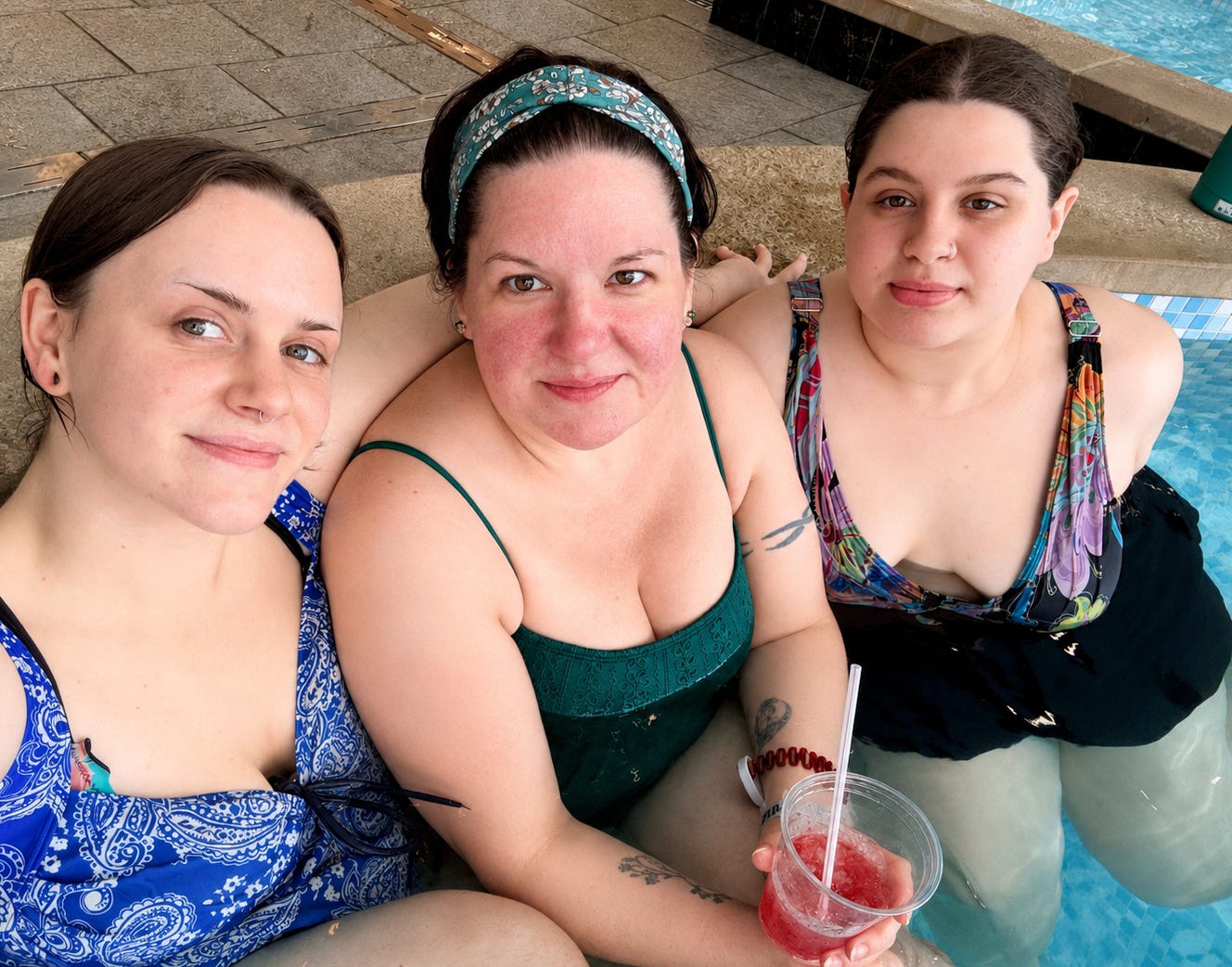
We made our way to the pool and bar area in the late afternoon—Gabby and Lia and I together again—where the air opened up and the water sparkled turquoise in the light. A full bar offered overpriced but strong beverages. I had two cosmopolitans, ruby red, cold, and completely perfect. We stood beneath the electric purple cherry blossom tree and gathered around the concrete cocktail tables, letting the day melt away in light conversation and easy laughter.
It was there, in that ordinary, blessed, swimsuit-and-sunlight section of the spa, that a woman named Cherie approached me with a kindness I hadn’t seen coming. She introduced herself and told me that she had felt my warmth from across the pool—that something about my presence had made her want to come over and say hello. I don’t always know how to receive that kind of thing, but this time I did.
We talked about being mothers, about being caretakers, about what it costs and what it offers; we laughed, sang to the music playing over the speakers, and got a little silly with our photos—I took some of her with her friends while they took some of us—and for a while the whole bar end of the spa felt like one of those rare, sweet, accidental afternoons where strangers decide, for no particular reason, to recognize each other.
There’s a thing that happens when women allow themselves, even briefly, to see each other across the water and say yes, you. I see you. Come closer. That’s a kind of medicine.
Somewhere between rooms, in the small notebook I’d been carrying, I had scribbled this:
I crave difference but connection. What a complicated way to be. I want to feel the interesting things that exist around me and learn from every possibility. I want to reach in and learn from their reality while understanding their way of seeing—and then return home, to me. I love places, other than the airport, where I can hear six or seven languages in one day.
That’s what King Spa gave me, in one form after another—difference and connection, the Nigerian family in the cypress, Cherie at the pool, multiple languages spoken around me throughout the day, my own daughter beside me thinking out loud, and the slow patient revelation that the world is full of people who’d gladly meet me halfway if I’d let them.
Just before leaving for the day, Gabby, Lia, and I went into the section of the spa reserved for women where bathing is done together, unclothed—an herbal bath, several heated pools, a cold plunge, a sauna, massage tables, and open showers along the walls. The herbal bath was 106 degrees and smelled like tea, green, warm, and faintly medicinal, the kind of smell that promises restoration before you’ve even sunk into it. It was probably one of my favorite parts of the day. The water left my skin impossibly soft and faintly perfumed for hours afterward, as good tea lingers on a cup long after it has been emptied. At the edge of every pool, small stone frogs poured clean filtered water back into the baths in steady, gentle streams.
Around the edges of the room, stood open showers with round mirrors attached to the walls, just big enough to see from the rib cage up. I watched myself in the open mirrors while showering. I saw the muscles in my shoulders while washing my hair—the same shoulders that have carried babies and rocked them to sleep, that have built furniture from Ikea and repaired broken toilets, that have borne the weight of responsibility and pain in silence when no one knew the truth unfolding behind closed doors. I saw my hazel eyes—greener than ever in that warm light—looking back at me in full capacity, present and alive.
And for the first time in so long, I didn’t hate what I saw. I’m learning how to love myself better. I felt beautiful. Around me, other women moved through their own bodies with the same peaceful grace, none of them carved from marble, all of them perfect in their biological honesty, soft and strong and lined and luminous—and real in a way the world rarely allows us to be.
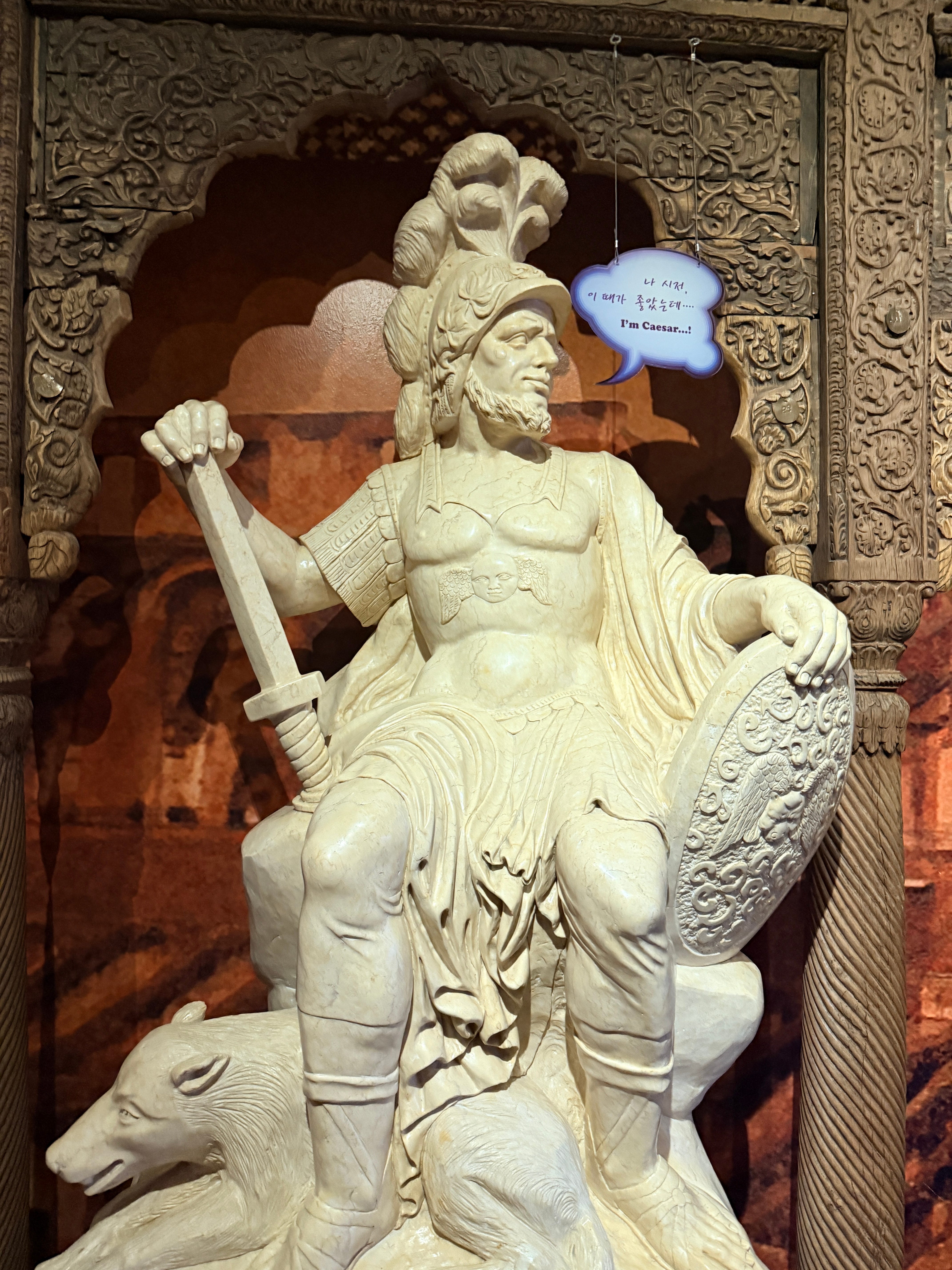
My daughter and I sat on the side of one of the heated pools and talked about thought, and society, and philosophy—about how women across time have so rarely been remembered for their intelligence, for their thoughts, for the elevated and embodied thinking that has always moved through them as it moves through us. We talked about nakedness, about what the body has come to mean in a society that has spent so much of its energy trying to control bodies and remove consent.
We talked about patriarchy and white supremacy, about the internalized methods of control that get passed down like heirlooms no one wants. We talked about how Athens, for all its philosophical glory, exiled women from its agora—and how the kind of feminine, embodied, relational thought that might have elevated that conversation was instead banished to the margins, where it has been quietly flowering for two and a half thousand years anyway. Conversations like this are part of why I had children—not so they would be like me, but so we could think together.
We dressed and left mid-evening. My skin still smelled faintly of the herbal bath, my body felt rinsed of something it had been carrying for longer than I’d realized, and underneath all of it, threading through every room of the day—through the cypress that has always carried bodies between worlds, through the amethyst that loosens illusion, through the warm familiar tea-scented water of the herbal bath that returned me to myself—was the movement of the river, the water that knows the way.
I’ll keep flowing toward whatever comes next—not by forcing a direction, not by gripping, but by trusting the current of my own nature and its slow, persistent intelligence as it makes its way, faithfully and without urgency, to the sea.
As water flows, it will find a way. As it flows, so too will I.


